Everyone benefits from a Dark Sky
Why Dark Skies?
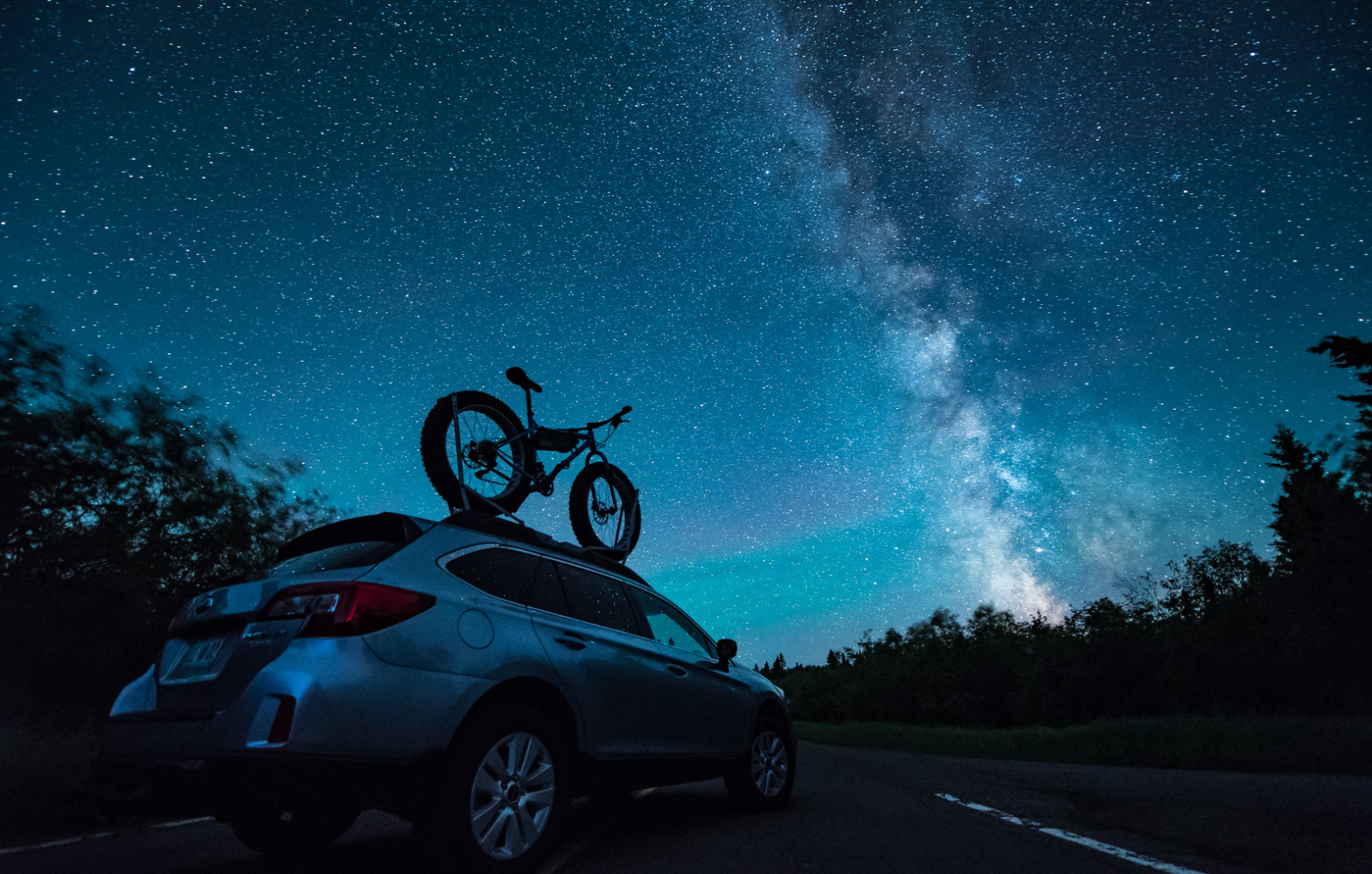
Image courtesy of Travis Novitsky http://www.travisnovitsky.com
In the global effort to reduce light pollution, the term dark sky describes a sky that isn't "lit" by skyglow or light pollution.
But who benefits from having dark skies? Everyone.
The benefits of a dark skies are far reaching:
Quality-of-life
Supporting the Environment
Health & Safety
Energy efficiency
Aesthetic beauty
Tourism
We see many places around Minnesota and other communities around Lake Superior as a place for national recognition for our dark skies. This will bring pride and tourism, and become a place to reconnect with the cosmos in an increasingly light-polluted world.
Quality of Life:
Imagine taking winter walks under the Milky Way, or your family being able to see the Northern Lights from your doorstep.
Tourism:
Astrotourism is a growing market, and becoming a certified Dark Sky Community or cultivating Urban Dark Sky Places will better support our communities and the region.
Light pollution from large urban areas like Minneapolis or Chicago spread skyglow for hundreds of miles. People currently need to travel to experience the beauty of our night skies.
Aesthetic beauty:
Caring for how we light our communities will make our world more beautiful. Everything, from our neighborhoods to gas stations to historic areas, are characterized by their lighting. Let's ensure beautiful, safe, and conscientious lighting for everyone.
Energy efficiency:
You wouldn't leave a hose on all night! "Wasted" light (pointed at the sky or poorly aimed light) wastes 3 billion dollars annually! Moreover, adopting "smart" lighting systems, that adjust to the moon or traffic patterns, are good for everyone.
Health & Safety:
Light is a crucial component to nighttime safety. However, more light isn't necessarily safer. Reducing glare, avoiding loss of low-light vision, and maintaining contrasts are all essential to maintaining good driving conditions, safe walking environments, and reducing light pollution.
Studies have recently shown that some "blue" lights can also disrupt our circadian rhythm, harming our melatonin production.
Our Work
The What, Why, and How of Monitoring Night Sky Brightness

Caitlin Johnson, PhD graduate in physics from the University of California, Santa Cruz, discusses the importance of monitoring night sky brightness and actions you can take to participate! Watch the talk on the youtube video below and you can also download her presentation here!
Where To Find Us
View all tabling events and volunteer opportunities on our POINT page >
Sep 6: MN State Fair - Eco Experience building
Sep 11-12: Voyageurs Star Party
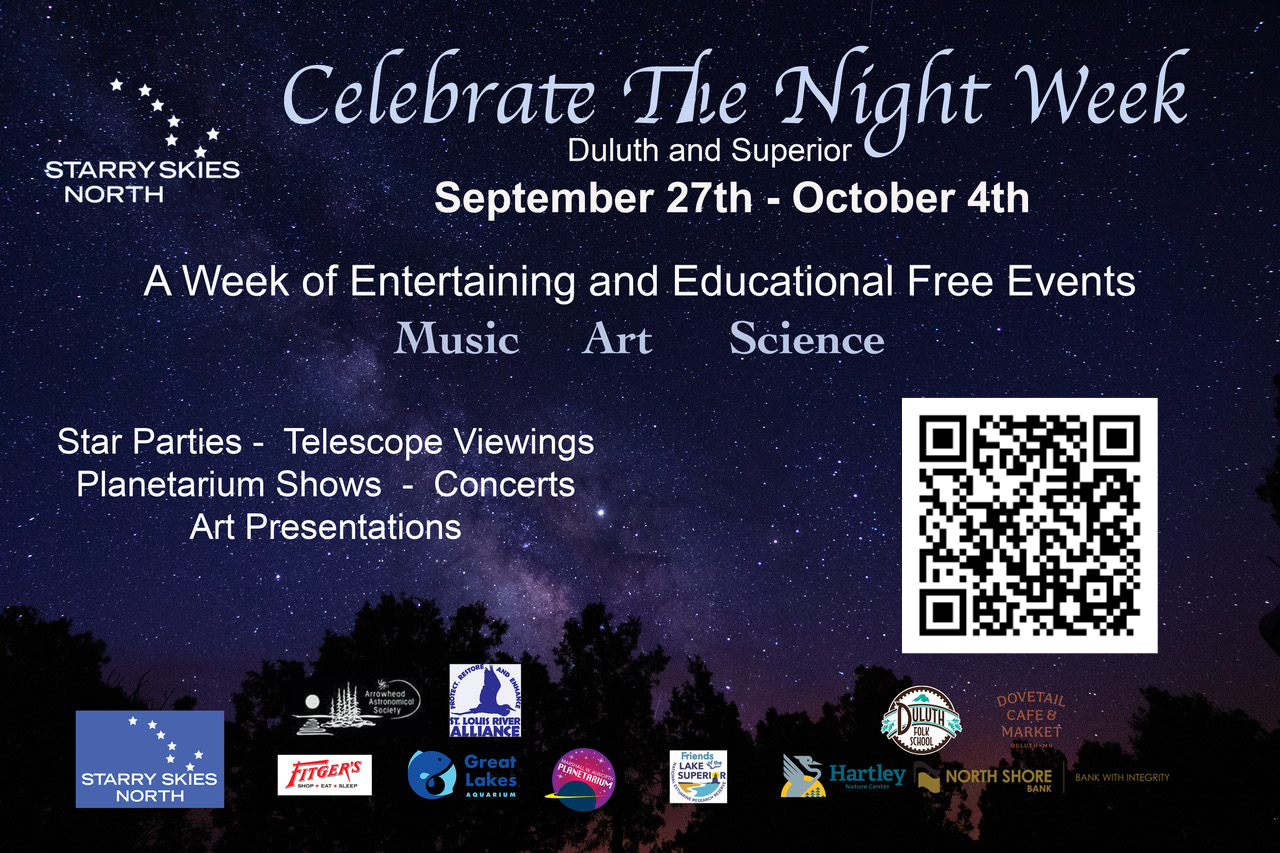
Sep 27 - Oct 4: Celebrate the Night Week - Duluth, MN and Superior, WI
There's nothing more beautiful than the night sky.
That means the most beautiful thing in the world can belong to all of us.
The noticeable lack of stars is a drain on the environment, on our resources, and affects us all.
Learn more about Light Pollution>
Preserve our Starry Skies
Light pollution travels hundreds of miles. So while dark skies are a community effort, it's also a regional one. More importantly, it means that only a few places in the United States have the opportunities for starry skies like many do in Minnesota and the Greater Midwest.
For those in proximity to a large city, the challenges of creating clean night skies are compounded not just by enormous skyglow but on coordination of dozens of suburbs and towns. In comparison, you can see for yourself how western Lake Superior, including the Twin Ports, is perfectly positioned to be a dark sky destination.
For those along Lake Superior, dark skies are an incredible resource, and something we should cultivate. Where have dark skies impacted your life?